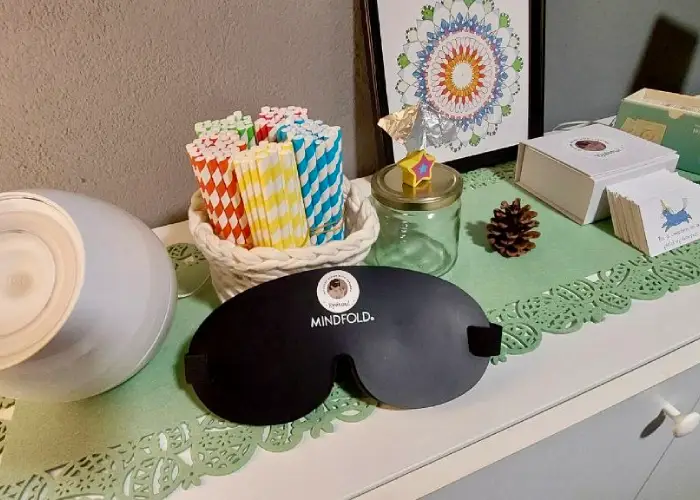
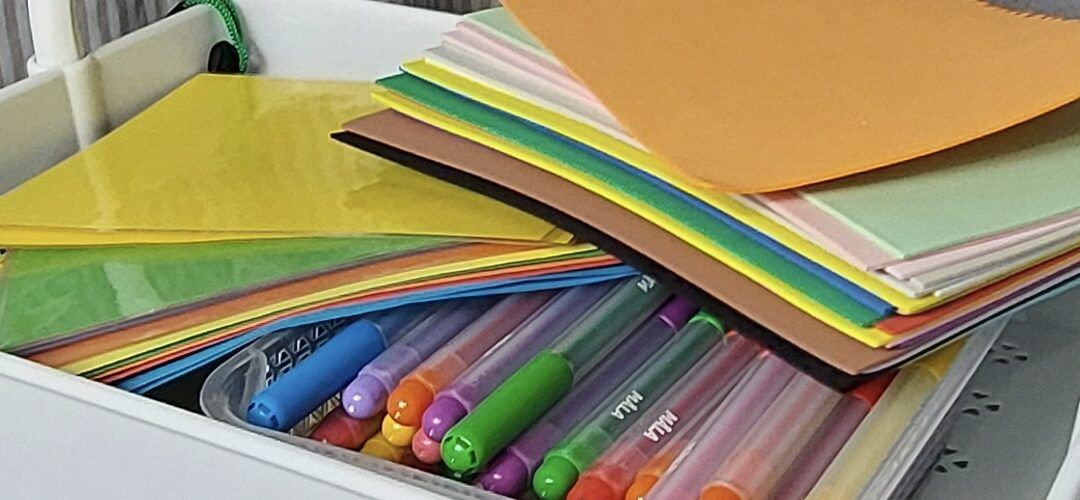
When I think about the materials I use in sessions, I’m not looking for anything special or complicated. I’m not interested in what is sophisticated or spectacular — quite the opposite.
I’m interested in simple materials — the kind that don’t stand out on their own and don’t dictate how they should be used.
They are open materials that can be used in many different ways, and that work just as well for someone who is just beginning as for someone with more experience. What changes is not the object, but the proposal, the play, and the way of approaching it. This way of approaching play is closely related to what I share in the post Play Is Only for Children. The same material can accompany very different processes without needing to be replaced by something “better”.
Materials with a story
Very often, the most interesting things aren’t found in a shop, but in the memory chest — that place where many mothers keep toys from when their children were little.
In my case, the materials don’t come from just one place or one stage of my life.
Some belonged to my own children, some are new ones I couldn’t resist, and others arrive with a story Among my materials there is everything: colourful plastic cutlery, cups of all sizes, rubber bands, pom-poms…
Little things that one day are lying around the house and suddenly, another day, your children tell you very seriously that they don’t want them anymore or that they no longer need them.
The other day, for example, María told me very firmly: “I don’t use this.” She showed me a game with pink and blue ping-pong balls that were supposed to land inside a tiny box with a ridiculously small opening — practically impossible to hit. I looked at the game, looked at it again… and started laughing. Truly. Even now, writing this, I’m still laughing.
I thought: How many glasses of wine would I need to drink to manage this?
Today I experienced something similar in the kindergarten, watching how the little ones became inspired creating structures with cardboard, small boxes, ribbons, caps, glue, and masking tape.
They were immersed in a world where creative boundaries were limitless.
And that’s where the magic lies. What no longer makes sense to them sometimes becomes the perfect material for me. Not because the object is special, but because it doesn’t impose, it doesn’t demand, it doesn’t promise anything. They are simple materials, almost absurd, light — inviting play without taking things too seriously, and allowing us to listen to what happens when there is simply no human way of doing it “wrong”.
Sharing and giving new life
There are also simple and special materials that belonged to my nephew and were part of his everyday life. When I knew they were no longer going to be used, a light turned on inside me. It filled me with joy to think that my project could give them a new life — that other children could enjoy them, and that they could continue accompanying, in a different way.
Sharing is just that: allowing what has been important to one person to continue doing good for others, without attachment or nostalgia — simply allowing it to remain in motion.
Less is more (really)
In sessions, I see again and again that you don’t need much to begin. In fact, the simpler the material, the more space there is to listen. That’s why, for a first encounter with intuitive vision, I usually propose something very simple: coloured cardstock.
Nothing more. Not as a closed exercise, and not as something to do “right”, but as a first contact.
Something that doesn’t intimidate, that doesn’t impose, and that doesn’t activate the feeling of: I have to get it right.
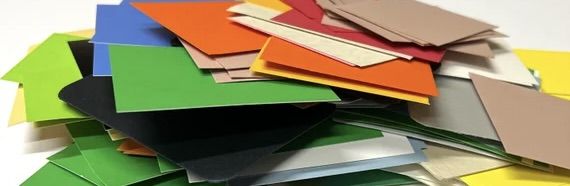
A first proposal
The idea is to go slowly, without pressure, introducing the colours little by little. It’s not about seeing them, analysing them, or looking for meanings. It’s about feeling them, listening to the body, and observing what information arrives — or doesn’t arrive.
Sometimes a sensation appears. Sometimes an emotion. And sometimes absolutely nothing. And all of that is fine.
There are no correct answers and no goals to achieve — only presence, listening, and curiosity. And very often, to begin with, that is already more than enough.