Even though I mention these as games to practise at home, it doesn’t mean that home is the only place where they can be practised.If you’ve read the post about simple materials, this one is a natural continuation. Not because anything needs to be followed in order, but because something very similar tends to happen both in sessions and at home.
Before anything else, an important clarification:
These are not exercises to achieve anything special.
They are not tests. They are not training.
And no — they are not meant to prove anything to anyone (not even to yourself).
They are just games.
And from experience — in sessions and beyond — I can say that when someone takes them too seriously, they tend to stop being useful. That’s when Ms. Frustration shows up… and there’s not much left to do.
Curiously, when a smile or a silly laugh appears, the body begins to cooperate much more.
(You might not stop laughing afterwards…)
The proposal is simpler than it seems
This is not about “seeing well”, noticing more, or having something interesting to report afterwards. It’s about listening.
Listening to how the body responds.
Listening to what appears… or doesn’t appear.
Listening even when all that’s there is a big and honest: “I don’t feel anything.”
It has happened to me — and it still does.
In sessions, that moment often comes with a sense of relief.
As if the body were saying: “Ah, okay… I don’t have to do this right.”
The atmosphere is almost everything
You can play alone, with your family, or with someone you trust. But more important than the game itself is the atmosphere.
You might feel like I’m repeating myself. I probably am. But setting aside pressure, corrections, and hurry makes a big difference. I see it every day.
Add a bit of humour and care less about doing it right — and the cocktail is complete.
Some simple ideas
Remember what I said before: there’s no wrong way to do this. Everything is perfect.
- The Colour You Can Feel
Choose a colour — out loud or silently — and notice what happens in your body.
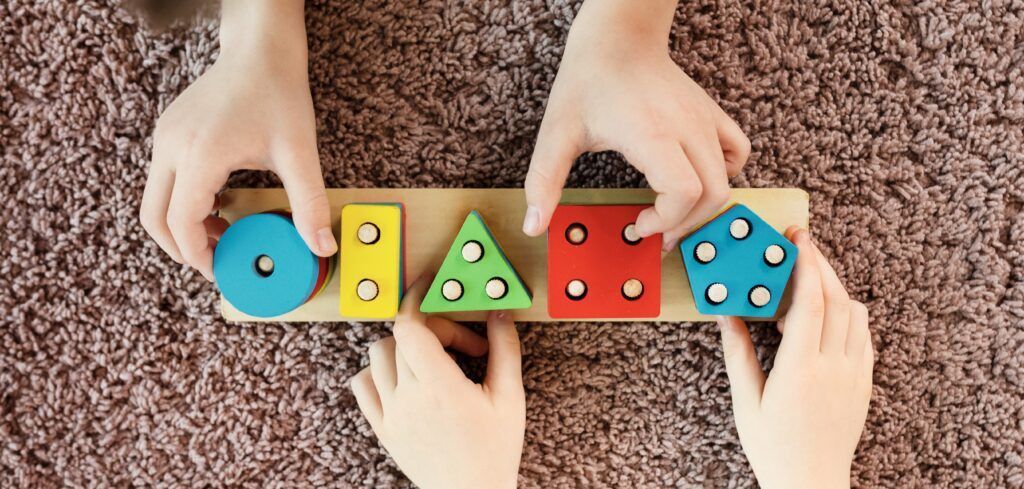
This is not about imagining or guessing. Just notice what reaches you.
Is it temperature? A strange emotion? A fleeting image? Or maybe the urge to yawn?
It’s not important to describe the shape. What matters is noticing how whatever comes, comes —
as pressure, as an impulse….
- Shapes with the Hands
One person makes a simple shape with their hands. The other, with their eyes closed, listens.
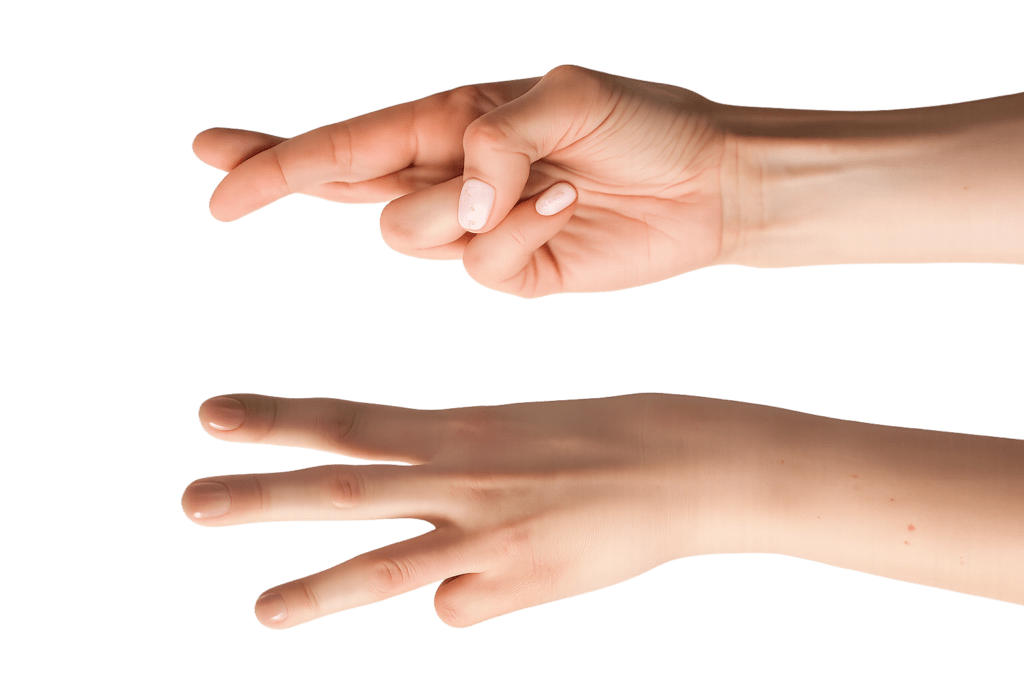
It’s not important to describe the shape. What matters is noticing how whatever comes, comes —
as pressure, as an impulse… Saying “I have no idea” is also an option — and possibly a doorway, even if it doesn’t seem like it.
- The Photo That Speaks
Place a photo face down and, without looking, listen to what appears. Here you can let your imagination move freely, without embarrassment. For example:
A word. A sensation. A slightly absurd story. Or nothing at all.
You can turn the photo over afterwards… or not. Because the game isn’t in checking, but in that moment beforehand — when you allow yourself to listen without looking and without expectations.
- The Body’s Yes and No
Ask simple, neutral questions. Nothing important. Nothing existential.
Often the body responds before the mind does:
a different breath, a small gesture, a soft tension, a turn of the head…
And if the familiar thought comes up:
“I think I’m making this up” — keep going anyway.
The body responds quietly, not particularly concerned with the mind’s opinion.
Some important hints
It’s not about getting it right. It’s about noticing how what comes, comes… and also when nothing comes.
With children: fewer words, more laughter. With adults: less explanation, more curiosity.
And if one day you don’t feel like playing — don’t play. Listening to that “no” is also a form of perception. And even if it doesn’t seem like it, that too is an important game.
If you’d like to share ideas and new games to practise at home, I encourage you to do so.
Warm regards, Susanna