Hello
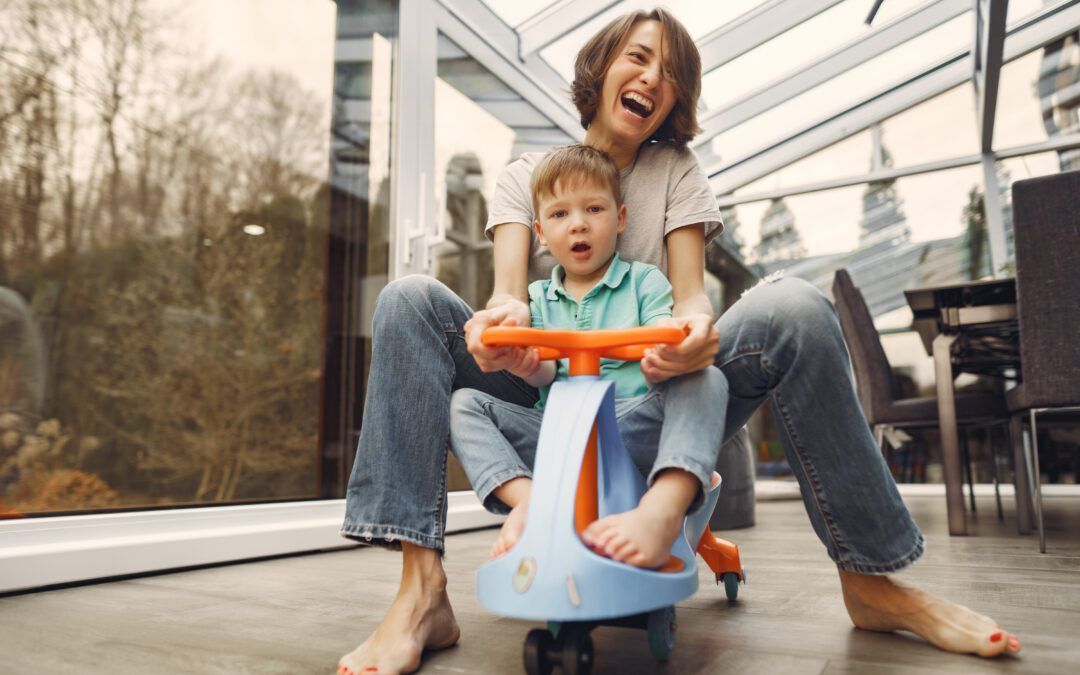
If you’ve arrived here, you’re probably a curious adult. Perhaps you have children, perhaps you spend time with them, or perhaps — as happened to me — you feel it’s been a long time since you’ve played in this way: without pressure, and from the body. Here, I share games for children of all ages, including yours.
This text doesn’t offer games or specific proposals. It offers something simpler and, at times, more difficult: permission.
An important note: this is not a test. There is no judgment. Zero control.
Playing is not about doing things right or learning something new. It’s about trying, making mistakes, laughing, and thinking a little less. It’s about letting the body go first and set the rhythm.
When children play, they are not chasing results. They move, stop, get bored, laugh, and begin again without overthinking. The body responds before the mind and doesn’t need explanations.
- Sometimes it responds with laughter.
- Sometimes with movement.
- Sometimes with silence.
All of that is information too — believe me.
A way of being
Playing like a child has less to do with what is done and more with how one is. With moving without a goal, looking around with curiosity, sitting on the floor, or changing the usual rhythm of the day.
Daily contact with young children has given me something I didn’t expect.
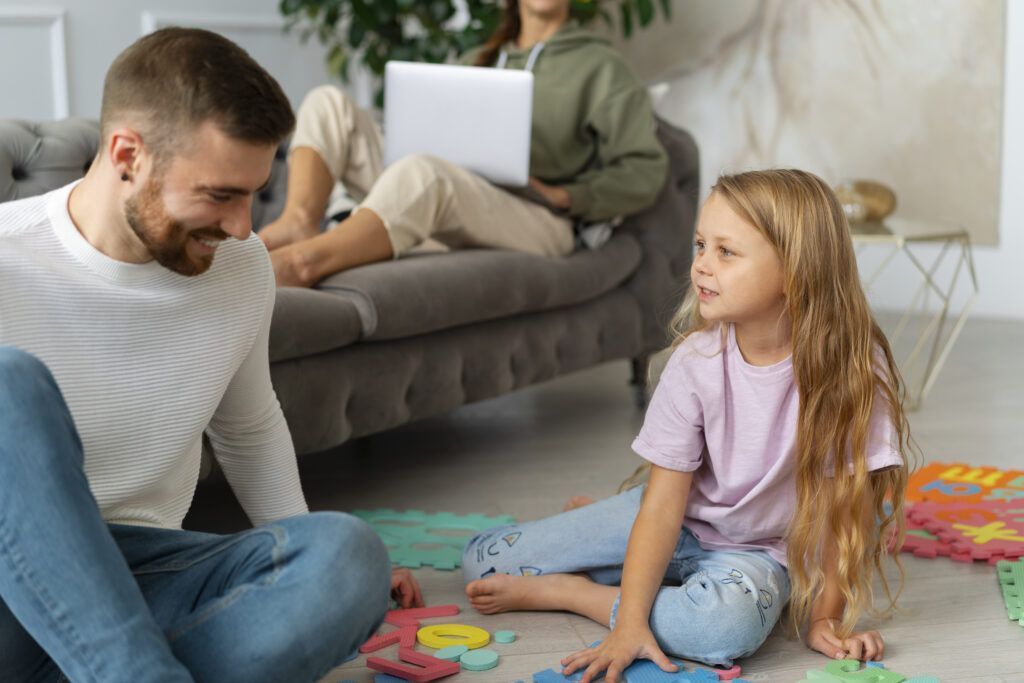
Sitting on the floor with them, playing with dolls, running, building wooden towers, creating shapes with blocks, stringing bead necklaces, decorating little boxes, sewing what breaks, or playing memory games has awakened in me a childlike part that may have been waiting for its moment.
In this unhurried sharing, I feel that I too recover time, perspective, and the richness of seeing the world through a child’s eyes.
And something similar happens in sessions
In sessions, something very similar to play takes place. Sometimes we don’t do anything special at all.
It might be sitting on the floor, moving a little, playing with an object, or simply flowing and seeing what emerges.
There is nowhere to get to and nothing specific that needs to happen. We observe what unfolds when there’s no hurry, when nothing has to be done right, and when we allow ourselves to stop.
Very often, just like in play, it’s in these simple moments that clarity appears — a sensation, an emotion, an image, or simply a deep rest.
And all of that is fine.
The smile
Over time, I’ve noticed something very simple: when someone smiles, things often work out better.
Not because they do them better, but because they’re more at ease, more comfortable, and less tense.
I see this often with children and in sessions too. When the body relaxes and a spontaneous smile appears — even a small one — something shifts. Things flow a little more easily.
There’s no need to look for it or force it. Just like in play, the less it’s chased, the more easily it appears.
Stopping is also part of the game
If one day you feel tired, you stop — as simple as noticing it. The same happens if boredom appears or if you don’t feel like doing anything at all. The best option, then, is to stop.
Listening to that limit is also part of the game, and part of perception.
This way of playing doesn’t aim to develop skills or train abilities. It seeks something simpler: to recover a lighter and more present attitude towards experience.
It often rests on simple materials — have you already read the post?
Because play only makes sense when it comes from willingness, not obligation.